Outlet first, charger second.
Never use a household extension cord for EV charging, and never run a cord from a balcony, window, or patio door to the parking stall. If the receptacle is in the wrong place or the wrong type, the fix is a new receptacle installed by a licensed electrician. More:
extension-cord safety.
In a parkade, the charger itself is the easy part. What decides whether a project gets approved, and whether the charger behaves once installed, is the building around it: concrete that blocks signal, shared electrical capacity, and how your electricity use gets measured and billed back to you.
The four parkade problems and the usual fix
| Problem | Why it happens underground | Usual fix |
|---|
| No cell or Wi-Fi signal | Concrete and steel block radio signal; building Wi-Fi rarely reaches the stall | Choose a charger that charges normally with no connection; treat the app as optional |
| Long run to the electrical room | Your stall may be far from the panel that can supply it | The electrician quotes the run; a shared or load-managed circuit may be cheaper |
| Who pays for the power | Common-area power is billed to the corporation | A metered charger, a sub-meter, or a flat fee the board sets |
| Building capacity | Many stalls may want charging on the same service | Load management shares capacity across stalls: condo load management |
No signal: what still works offline
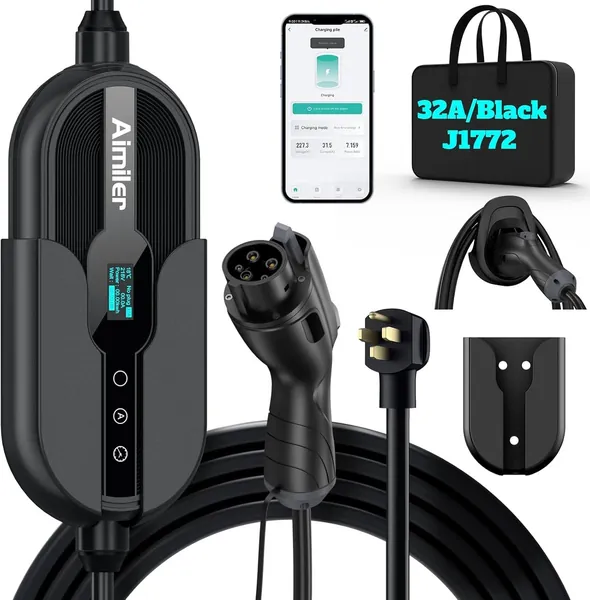
Most Level 2 chargers start charging when you plug in, with or without a network connection. What you lose offline is usually the app: remote start, schedules set from your phone, and session history. Before you buy, check the manual for what happens with no connection.
| Feature | Needs a connection? | Parkade tip |
|---|
| Basic plug-in-and-charge | Usually no | Confirm in the manual for your model |
| Charging schedule (e.g. overnight rates) | Often set in the app; some chargers keep the schedule once set | Many EVs can schedule charging from the car itself, which needs no signal at the stall |
| Energy reports for billing | Usually yes, for app-based reports | Ask the board whether they will accept a sub-meter instead |
| Firmware updates | Yes | Update when signal is available, or ask the installer |
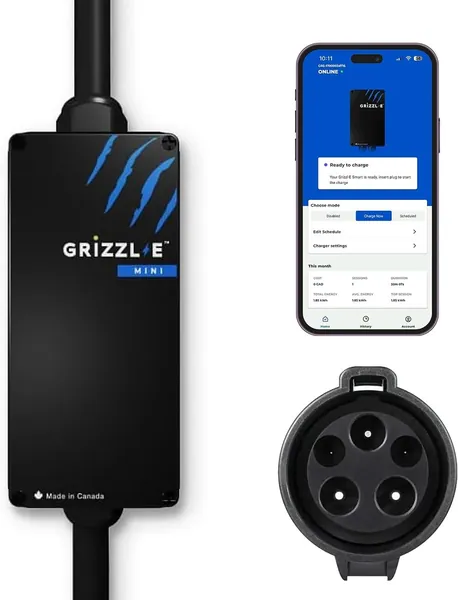
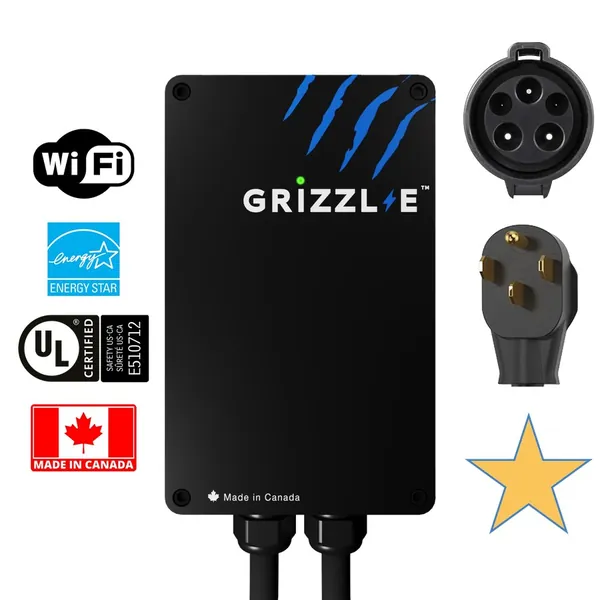
Among the chargers below, the Grizzl-E Mini Connect listing says Wi-Fi is optional and the charger works offline. For the others, read the manual or ask the seller before buying.
Metering: how the board knows what you used
Condo boards usually want your charging paid by you, not by every owner through common expenses. Common approaches are a separate sub-meter on your circuit, a charger that reports energy used, or a flat monthly fee. Which one is allowed, and whether a fee can be charged per kWh, depends on your province and your condo’s rules. Ask the board what it will accept before you buy the charger, because the answer may decide which model you need.
Steps that usually work
- Ask the property manager whether the building has an EV policy, an EV-ready plan, or a load management system already.
- Ask which stall circuits are possible and how energy will be measured.
- Get a quote from a licensed electrician who has seen the electrical room.
- Submit the written request with the quote, the charger’s Canadian safety mark, and the metering plan: condo board approval. Ontario owners: Ontario condo request.
- Only then buy the charger the electrician and board have agreed on.
Outlet and amp caveats
- A NEMA 14-50 receptacle is on a 50 A circuit at most, so plug-in chargers stop at 40 A continuous (Canadian Electrical Code Rule 86-302, about 80% of the breaker). A 6-50 works the same way for chargers with that plug.
- A plug-in charger set to 32 A needs a 40 A circuit; 24 A needs 30 A. Set the charger to match the breaker, never higher.
- Hardwired chargers above 40 A need a larger circuit sized by your electrician after a load calculation.
- New circuits need a licensed electrician and the permit your province requires (in Ontario, an ESA permit).
Caveats
- Offline behaviour varies by model and firmware; check the manual.
- Parkade circuits are often shared or capped by the building, so 32 A or less may be what is approved.
- Condo rules on metering and fees vary by province and building. Nothing here is a statement of what your board must allow.
FAQ
Will an EV charger work with no cell signal in an underground parkade?
Most Level 2 chargers charge normally with no connection. You usually lose app features like remote start, phone schedules and session history. Check the manual for your model.
How does a condo bill me for EV charging in the parkade?
Common options are a sub-meter on your circuit, a charger that reports energy used, or a flat monthly fee set by the board. What is allowed depends on your province and condo rules.
Can I schedule overnight charging without Wi-Fi?
Often yes. Many EVs can schedule charging from the car itself, and some chargers keep a schedule once set. Check your car and charger manuals.
Do I need load management in a condo parkade?
Not always, but many buildings use it so more stalls can charge on the same electrical service. Your board and electrician decide based on capacity.
Who installs a charger in a condo parkade?
A licensed electrician approved by the board, with the permit your province requires. In Ontario that means an ESA permit.