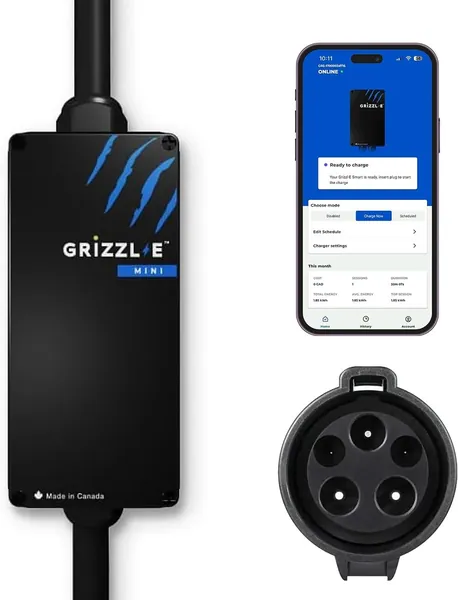
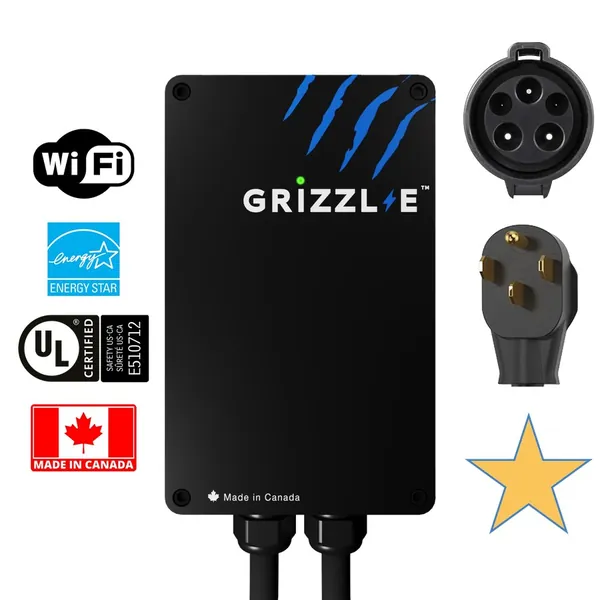
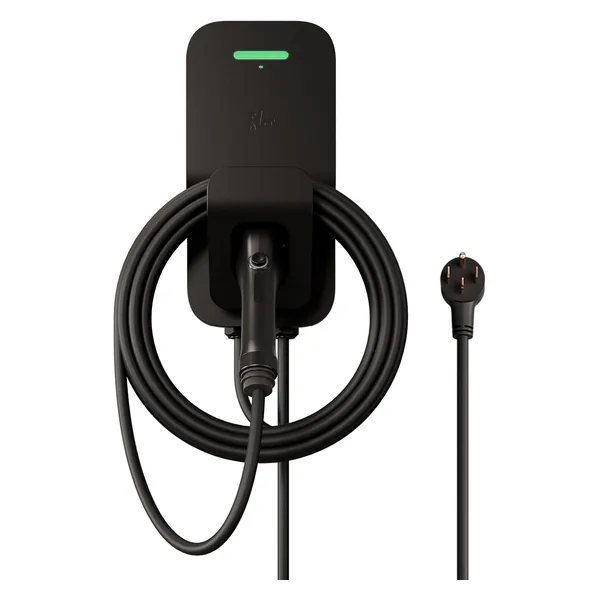
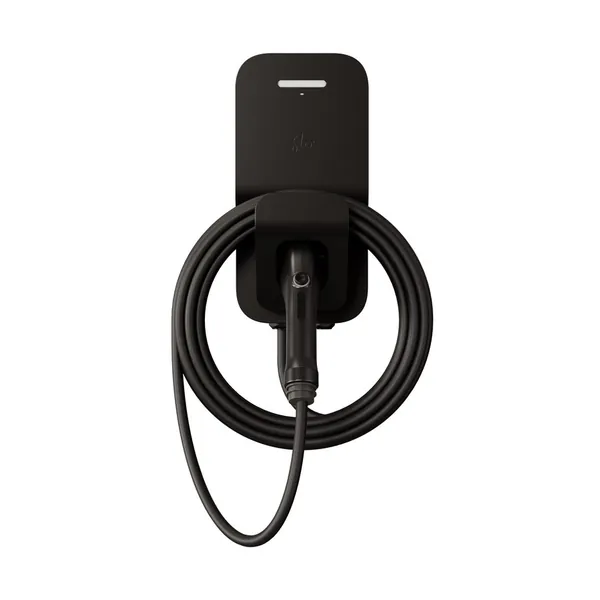
Outlet first, charger second.
Never use a household extension cord for EV charging, and never run a cord from a balcony, window, or patio door to the parking stall. If the receptacle is in the wrong place or the wrong type, the fix is a new receptacle installed by a licensed electrician. More:
extension-cord safety.
Breakers trip to protect wiring from overheating, and ground-fault devices (GFCI) trip when current is leaking somewhere it should not. Resetting over and over without finding the cause risks damage or fire. Only reset once; if it trips again, stop charging and follow the steps below.
Common causes and what they point to
| What you see | Likely cause | What to do |
|---|
| Breaker trips after 30–90 minutes of charging | Charger amp setting too high for the circuit, or other loads on the same circuit | Lower the charger setting to match the breaker (80% rule); ask whether the circuit is shared |
| Breaker trips the moment you plug in | Fault in the cord, plug, outlet or wiring | Stop. Do not reset again. Get a licensed electrician to inspect |
| GFCI trips at an outdoor stall, often in rain or snowmelt | Moisture in the outlet, plug or cover | Stop. Ask for a weatherproof in-use cover and an inspection; never dry and retry repeatedly |
| Trips only when a neighbour charges or a heater runs | Shared circuit or building capacity limit | Ask the building about a dedicated circuit or load management |
| Plug or outlet feels hot, looks discoloured, or smells | Loose or worn contacts overheating | Stop immediately. Do not use the outlet until an electrician repairs it |
Match the charger setting to the breaker
EV charging is a continuous load, so Canadian rules size it at about 80% of the breaker (Canadian Electrical Code Rule 86-302). A setting above that is the most common cause of a slow trip.
| Breaker | Max continuous charging current | Typical use |
|---|
| 15 A, 120 V | 12 A | Level 1 on a household outlet |
| 20 A, 120 V (dedicated) | 16 A | Level 1 on a dedicated circuit |
| 30 A, 240 V | 24 A | Small Level 2 |
| 40 A, 240 V | 32 A | Mid Level 2 |
| 50 A, 240 V (NEMA 14-50) | 40 A | Full plug-in Level 2 |
If you do not know the breaker size, ask your landlord, property manager or an electrician before changing settings.
What a driver can safely check (and what not to touch)
- OK: lower the charger or car amp setting; unplug other devices on the same outlet; check the plug and cord for damage; note when trips happen and tell the building.
- Not OK: swap in a bigger breaker, open the panel or outlet, bypass a GFCI, or use an extension cord or adapter to reach a different outlet.
- Apartment and condo panels belong to the building. Report trips to the property manager in writing so there is a record.
Outlet and amp caveats
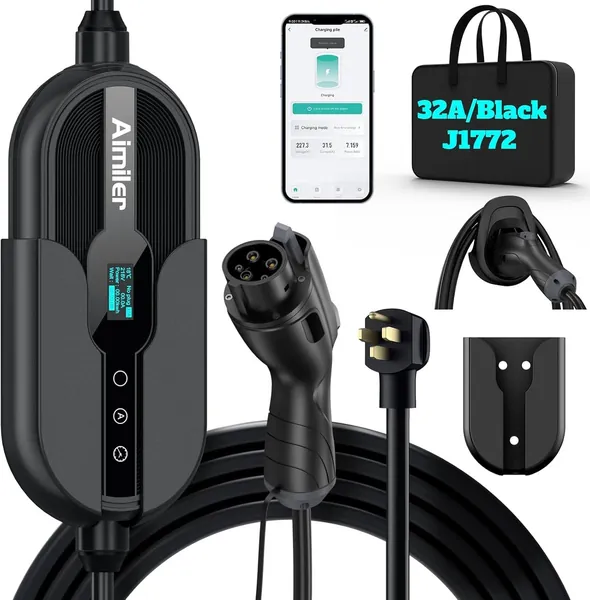
- A NEMA 14-50 receptacle is on a 50 A circuit at most, so plug-in chargers stop at 40 A continuous (Canadian Electrical Code Rule 86-302, about 80% of the breaker). A 6-50 works the same way for chargers with that plug.
- A plug-in charger set to 32 A needs a 40 A circuit; 24 A needs 30 A. Set the charger to match the breaker, never higher.
- Hardwired chargers above 40 A need a larger circuit sized by your electrician after a load calculation.
- New circuits need a licensed electrician and the permit your province requires (in Ontario, an ESA permit).
Caveats
- This page does not diagnose your installation. Repeated trips need a licensed electrician.
- Ground-fault protection rules for receptacles vary by installation and code edition; your electrician decides what is required.
- Never reset a breaker more than once without finding the cause.
FAQ
Why does my EV charger trip the breaker after an hour?
A slow trip usually means the charger is drawing more than about 80% of the breaker for a long time, or something else shares the circuit. Lower the charger setting to match the breaker and ask whether the circuit is dedicated.
Why does my EV charger trip the GFCI outside?
Moisture in an outdoor outlet, plug or cover is a common cause, but so is a fault in the cord or charger. Stop charging and have a licensed electrician inspect; do not bypass the GFCI.
Can I install a bigger breaker so it stops tripping?
No. The breaker protects the wire. A bigger breaker on the same wire can overheat it. Only a licensed electrician should change circuits, with the permit your province requires (in Ontario, an ESA permit).
Is it safe to keep resetting the breaker?
No. Reset once at most. If it trips again, stop charging and get the cause found.
Who fixes a tripping EV outlet in a rental or condo?
Report it to your landlord or property manager in writing. The building arranges a licensed electrician for its own wiring.
Will a lower amp setting charge too slowly?
It charges more slowly but safely. Use the hour math on our Level 1 vs Level 2 guide to see whether the lower setting still fits your overnight window.