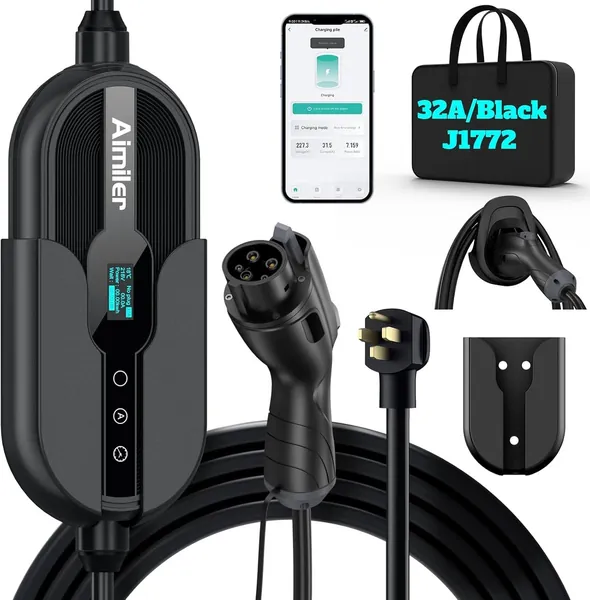
Outlet first, charger second.
Never use a household extension cord for EV charging, and never run a cord from a balcony, window, or patio door to the parking stall. If the receptacle is in the wrong place or the wrong type, the fix is a new receptacle installed by a licensed electrician. More:
extension-cord safety.
A basement apartment is usually part of a house the landlord owns or lives in. The good news: there is often a driveway and an exterior wall close to the panel. The catch: the panel, the meter and the driveway are usually shared with the upstairs unit, so power use and parking have to be agreed in writing.
Your setup decides the ask
| Your situation | What to ask the landlord for | Who pays for the power |
|---|
| One hydro meter for the whole house, utilities included | A dedicated outdoor receptacle near your parking spot | Agree a flat monthly amount or a sub-meter in writing |
| Separate meter for your unit | A receptacle fed from your unit’s panel, if the electrician says it fits | You do, through your own bill |
| Upstairs owner-occupied, small panel (e.g. 100 A) | Start with a dedicated Level 1 circuit, or a low-amp Level 2 | Agree in writing; see 100 A panel sizing |
| Street parking only | A driveway or pad spot first; charging comes after parking | Consider public charging meanwhile |
Level 1 or Level 2 for a basement unit?
| Option | Typical circuit | Range per 8 hours* | Fits when |
|---|
| Level 1 on a dedicated 15 A or 20 A circuit | 120 V | about 55–75 km | Short commutes, small panel |
| Level 2 at 16 A | 240 V, 20 A breaker | about 150 km | Tight panel, but you want faster charging |
| Level 2 at 32 A | 240 V, 40 A breaker | about 300 km | Panel has room after a load calculation |
*Illustrative arithmetic: Level 1 at about 1.4–1.9 kW, Level 2 at 3.8 kW (16 A) and 7.7 kW (32 A), example car using 20 kWh per 100 km, before charging losses. Winter cuts real numbers.
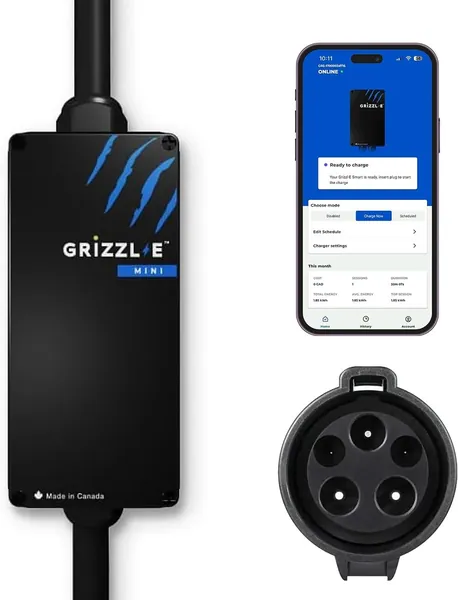
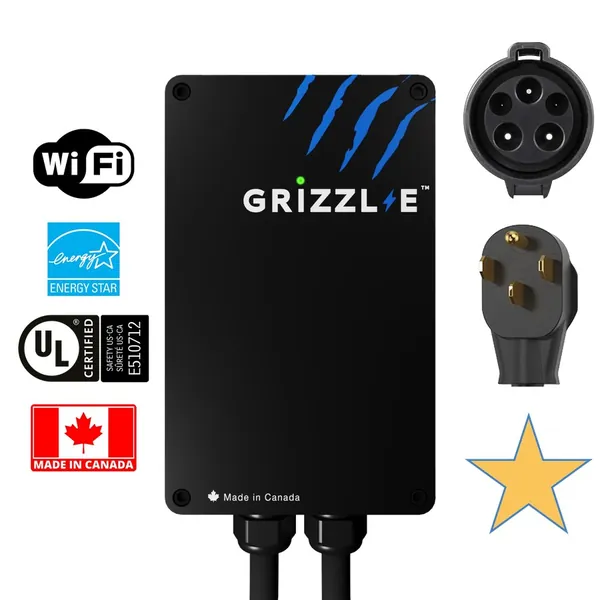
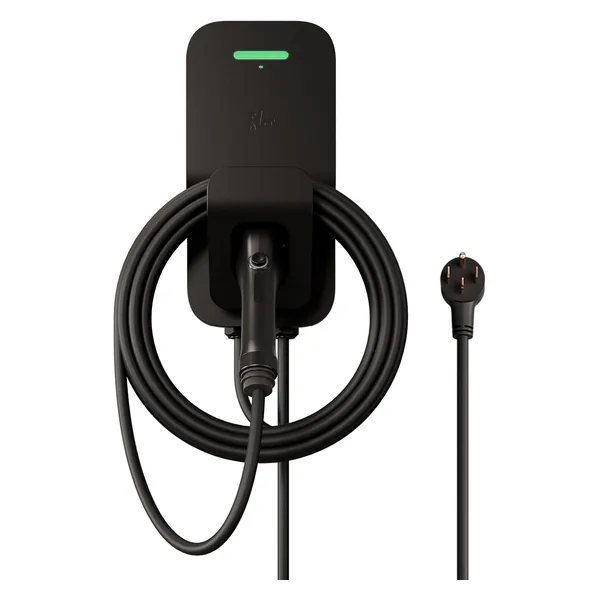
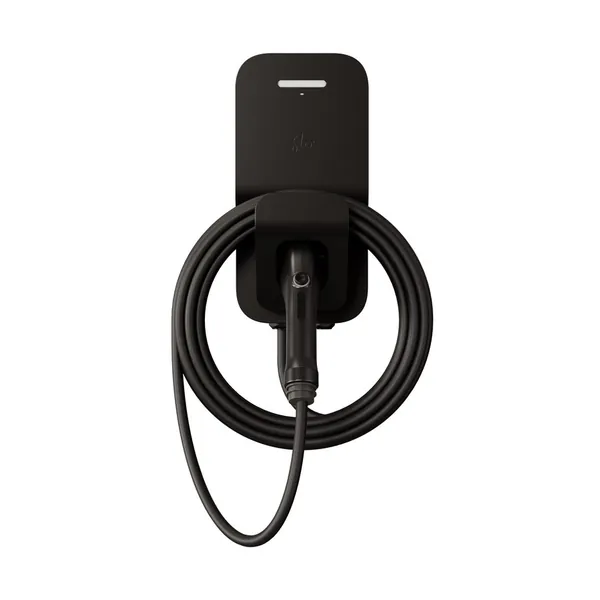
A plug-in Level 2 charger moves with you when you leave, which is usually what both tenant and landlord want. Many plug-in chargers can be turned down to match a smaller circuit.
Put these in writing
- Which parking spot is yours, and that charging is allowed there.
- Who paid for the receptacle and who owns it when you move out (it normally stays with the house).
- How electricity for charging is paid: flat monthly amount, sub-meter reading, or your own meter.
- That the work is done by a licensed electrician with the required permit.
- That no extension cords will be run from the unit, a window or a door.
Rules on billing tenants for electricity vary by province, so check before agreeing to a per-kWh charge. A letter you can adapt: landlord request letter. Landlords reading this: landlord guide.
Outlet and amp caveats
- A NEMA 14-50 receptacle is on a 50 A circuit at most, so plug-in chargers stop at 40 A continuous (Canadian Electrical Code Rule 86-302, about 80% of the breaker). A 6-50 works the same way for chargers with that plug.
- A plug-in charger set to 32 A needs a 40 A circuit; 24 A needs 30 A. Set the charger to match the breaker, never higher.
- Hardwired chargers above 40 A need a larger circuit sized by your electrician after a load calculation.
- New circuits need a licensed electrician and the permit your province requires (in Ontario, an ESA permit).
Caveats
- Range figures are arithmetic, not a test.
- Secondary-unit rules (parking, permits, utilities) vary by city and province.
- Your lease and provincial tenancy rules come first; nothing here changes them.
FAQ
Can I charge an EV if I rent a basement apartment?
Often yes, if there is a parking spot and the landlord agrees to a proper outdoor receptacle installed by a licensed electrician. Get the parking, power cost and ownership terms in writing.
Who pays for EV charging electricity in a shared-meter house?
Whatever you and the landlord agree in writing, usually a flat monthly amount or a sub-meter reading. Rules on billing tenants for electricity vary by province.
Is Level 1 enough for a basement apartment tenant?
For short daily commutes it can be. A dedicated 120 V circuit adds roughly 55–75 km over 8 hours in our example, less in winter.
Can I run an extension cord from my basement window to my car?
No. Household extension cords and cords through windows or doors are not safe for EV charging. Ask for a receptacle at the parking spot instead.
Does the charger leave with me when I move?
A plug-in charger does. The receptacle and circuit normally stay with the house; agree that in writing up front.