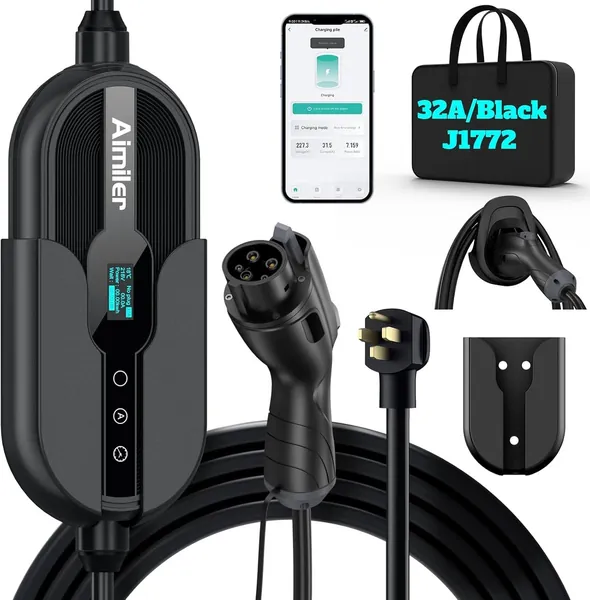
Outlet first, charger second.
Never use a household extension cord for EV charging, and never run a cord from a balcony, window, or patio door to the parking stall. If the receptacle is in the wrong place or the wrong type, the fix is a new receptacle installed by a licensed electrician. More:
extension-cord safety.
Who approves it depends on what you own
| Your situation | Who approves | Whose panel and meter | First step |
|---|
| Freehold townhouse (you own the unit and land) | You; check any shared-wall or easement rules | Usually your own | Electrician quote and load check |
| Condo townhouse | The condo corporation; driveways are often exclusive-use common elements | Usually your unit’s, but the wall or ground may be common elements | Written application to the board: Ontario condo request |
| Renting a townhouse or duplex unit | Your landlord, in writing | Confirm it’s your meter, not the owner’s or a shared one | Landlord request letter |
| You own a duplex and a tenant shares the driveway | You, but agree on use with your tenant | Decide which unit’s meter feeds it | Put stall use and electricity billing in writing |
For condo townhouses, Ontario’s condo rules set out an owner application process, and the agreement must allocate install costs plus repair, maintenance, and insurance duties. For rentals, costs and ownership at move-out should be agreed first: outlet cost and who pays.
Plug-in or hardwired on an outside wall
| Plug-in (NEMA 14-50 receptacle) | Hardwired |
|---|
| Outdoor receptacle | Needs a weather-rated receptacle with an in-use cover | No exposed receptacle |
| Take it when you move | Yes; easier for renters | No; stays with the unit |
| Max setting | 40 A on a 50 A circuit | Can go higher if the panel allows; installer sets it |
| Fits best for | Renters, condo townhouses that prefer removable equipment | Freehold owners staying put |
Either way, your electrician decides the circuit size after a load calculation. More detail: portable vs hardwired.
Driveway practicalities people forget
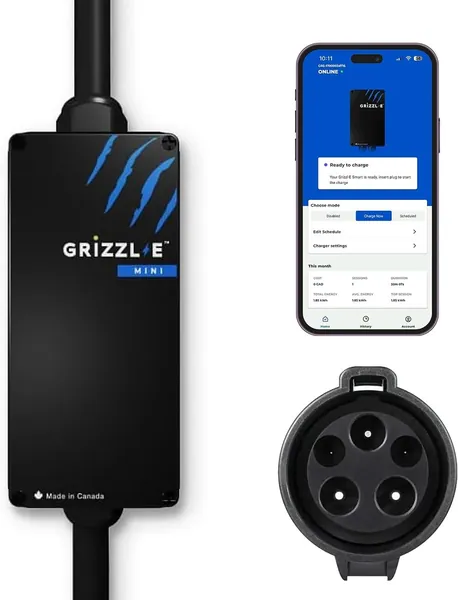
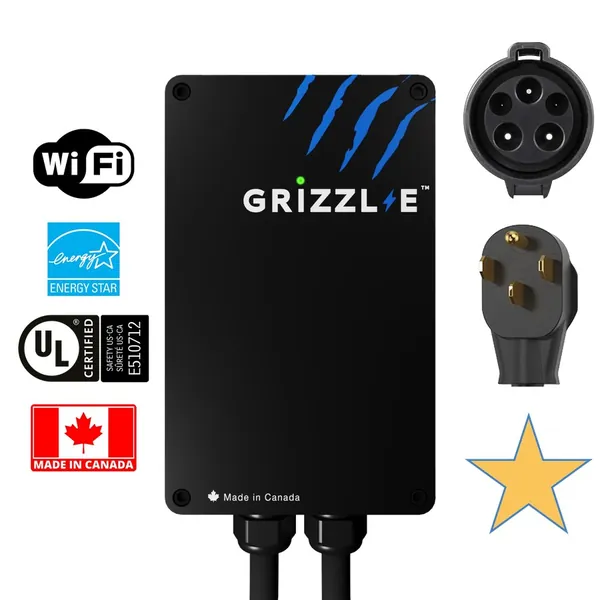
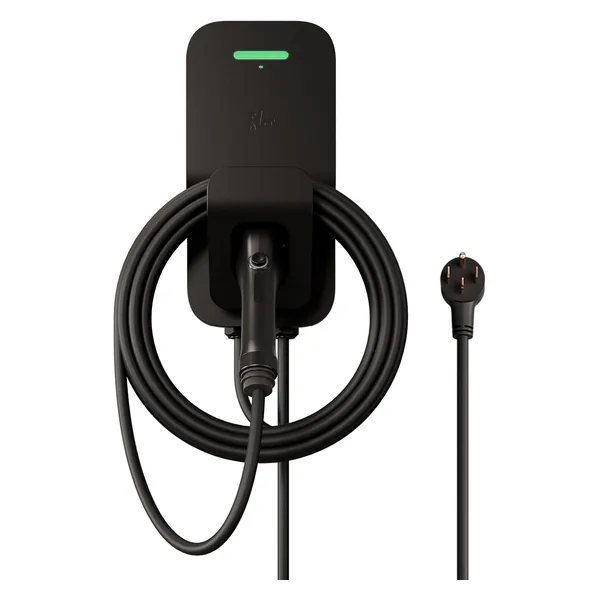
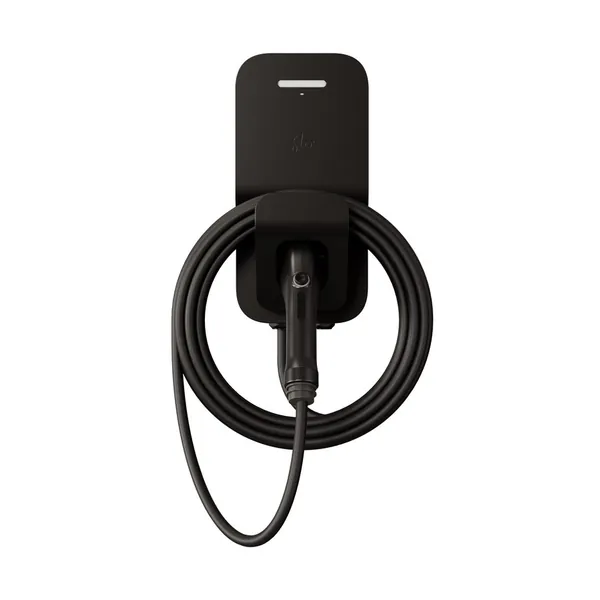
- Measure reach both ways. All the chargers below list a 25 ft cable. Measure from the proposed mount point to your car’s charge port when parked nose-in and when backed in, around any steps or meter.
- Keep cable off the sidewalk. Don’t lay a charging cable across a public sidewalk or a neighbour’s side of a shared driveway. Mount the charger so the cable reaches without crossing.
- Snow and salt. Mount high enough to clear snowbanks and plow throw; use the holster so the connector isn’t left in slush.
- Theft and tampering. A plug-in unit can be lifted off its bracket; some brackets have a security pin. Ask about a lockable receptacle cover.
- Overnight rates. If the meter is yours, Ontario’s ultra-low overnight plan can cut the cost of charging: Ontario overnight rate.
Outlet and amp caveats
- Set the charger to about 80% of the breaker (Canadian Electrical Code Rule 86-302): 32 A on 40 A, 40 A on 50 A.
- Older townhouses and duplex conversions often have 100 A service or less per unit. A smaller circuit or load management may fit where a 50 A circuit doesn’t: 100 A panel sizing.
- Never run a household extension cord through a door or window to the driveway, and don’t borrow an exterior outlet that feeds other loads.
- In Ontario, EV charger installs are done by a licensed electrical contractor who files the ESA permit.
Caveats
- Condo declarations differ; exclusive-use parking rules are in your own declaration and by-laws.
- Duplex meter setups vary widely. Confirm which meter and panel any new circuit would come from before quoting.
- Municipal rules on driveways, sidewalks, and boulevards differ by city.
- Prices, cable lengths, and settings come from current Amazon.ca listings and can change.
FAQ
Can I install an EV charger at my condo townhouse driveway in Ontario?
Usually with condo corporation approval. Ontario’s condo rules set out an owner application process, and the agreement covers install costs and ongoing repair, maintenance, and insurance duties.
Do I need a permit for an EV charger at my townhouse in Ontario?
Yes, in general. A licensed electrical contractor installs it and files the ESA permit.
Is a plug-in or hardwired charger better outside?
Hardwired avoids an exposed receptacle and suits owners staying put. Plug-in needs a weather-rated receptacle with an in-use cover but can move with you, which suits renters.
How long a charging cable do I need for a driveway?
Measure from the mount point to your charge port in both parking directions. The chargers listed here have 25 ft cables; mount closer rather than adding any extension.
I rent a duplex unit. Can I ask for an EV outlet at the driveway?
Yes, ask in writing. Confirm whose meter and panel it would use, who pays, and who owns it when you move out.