No unsafe DIY.
This page compares legitimate options. It does
not endorse cords from balconies or windows, household extension cords, or stealing power from hallways / visitor plugs. If you lack permission and a proper receptacle, use public / workplace charging while you negotiate — see
Renter Playbook.
The short answer
For most condo and apartment drivers who get a dedicated continuous-load receptacle approved:
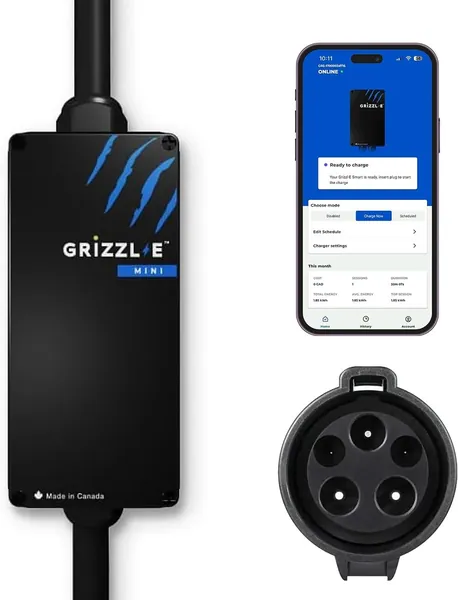
- Overnight portable Level 2 usually wins on $/kWh, time, and predictability
- Public Level 2 is a strong bridge and top-up tool (work, errands, shared building stalls)
- DC fast is for trips and emergencies — expensive as a daily habit
- Level 1 at home can still cover short urban commutes in mild weather; winter often exposes the gap
Cost ranges (directional — confirm live)
Public prices move by network, province, membership, and pricing model (per kWh vs per minute vs power-based). Treat the bands below as orientation only — check the app at the stall.
| Mode |
Directional CAD price theme |
Time / lifestyle |
| Home / stall portable L2 on approved 14-50 |
Residential electricity rate (province / TOU / suite metering) — typically the lowest $/kWh path once the receptacle exists |
Plug in after parking; wake up recovered |
| Public Level 2 |
Often cited roughly ~$0.20–$0.40 / kWh nationally depending on network / province (community trackers sometimes show ~$0.25 L2 average themes) — confirm live |
1–3+ hours for meaningful recovery; shopping / work fit |
| Public DC fast |
Provincial averages commonly discussed around ~$0.40–$0.70 / kWh with a mid-2026 national midpoint theme near ~$0.48–$0.50 / kWh in industry trackers — confirm; session fees / idle fees may stack |
Fast but costly as a daily primary |
| Level 1 only |
Cheap per kWh if you already have a legal 120 V path — but slow |
Fine for short commute; winter risk |
Do not invent annual dollar totals from these bands without your own km, efficiency, and local rates. The point is relative: once permission exists, overnight portable L2 usually beats living on DCFC.
When public still wins (or ties)
- You are mid-negotiation with a landlord or board
- Building offers reliable shared / load-managed stalls with fair etiquette
- Workplace charging is free or heavily subsidized
- You drive very few km and Level 1 covers the week
- Travel days and road trips (DCFC belongs here)
Shared-stall etiquette
Visitor and shared EV stalls are community infrastructure, not your private overnight tank:
- Move when charged / respect posted time limits
- Don’t “ICE” (block) stalls with a gas car
- Don’t leave adapters or cables as territorial markers
- Report broken gear to property management — don’t jury-rig
Connector note (light)
If your car is NACS and the stall / portable EVSE is J1772 (or the reverse), read the direction carefully before buying anything. Light product mentions live on the dedicated guide — adapter picks are discussed there only: J1772 ↔ NACS adapter guide. An adapter is not a substitute for building permission or a safe receptacle.
Permission funnels by province (siblings)
City hubs