Outlet first, charger second.
Never use a household extension cord for EV charging, and never run a cord from a balcony, window, or patio door to the parking stall. If the receptacle is in the wrong place or the wrong type, the fix is a new receptacle installed by a licensed electrician. More:
extension-cord safety.
Charger setting vs circuit size
The Canadian Electrical Code treats an EV charger circuit as a continuous load (Rule 86-302), so the charger is typically set to about 80% of the breaker; your electrician confirms. Power figures below are simple volts × amps at 240 V (120 V for Level 1). Range added per hour depends on your car; check its efficiency and divide.
| Circuit (breaker) | Typical charger setting | Approx. power | Approx. energy in 10 hours | Fits a tight 100 A panel? |
|---|
| 15 A, 120 V (Level 1) | 12 A | 1.4 kW | about 14 kWh | Usually, if the circuit is dedicated |
| 20 A, 240 V | 16 A | 3.8 kW | about 38 kWh | Often |
| 30 A, 240 V | 24 A | 5.8 kW | about 58 kWh | Sometimes |
| 40 A, 240 V | 32 A | 7.7 kW | about 77 kWh | Electrician decides; may need load management |
| 50 A, 240 V | 40 A | 9.6 kW | about 96 kWh | Often too much without load management |
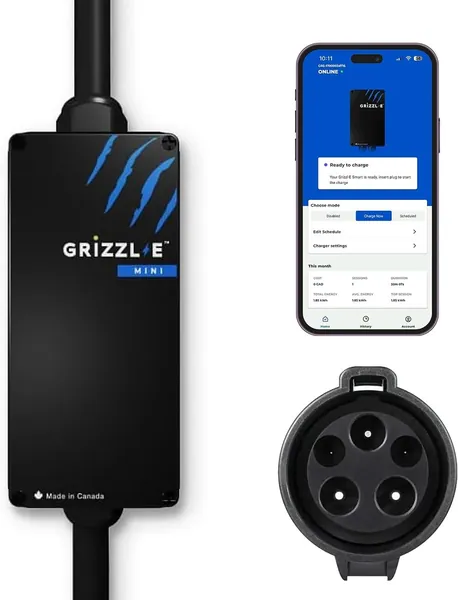
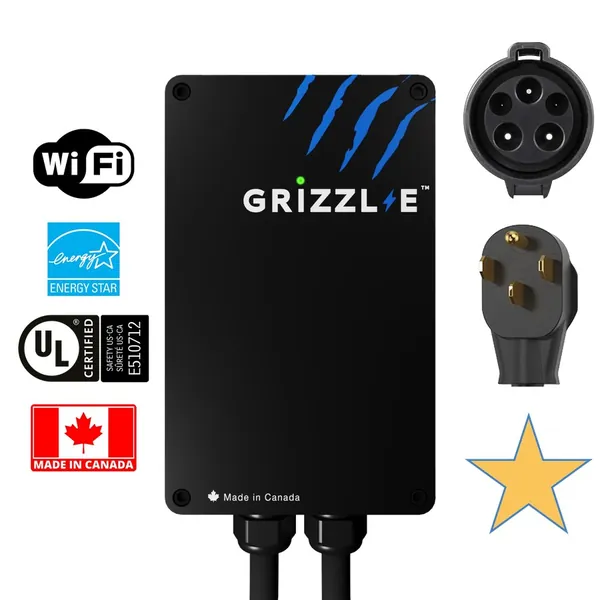
Real charging is a little lower than these figures because of losses, and your car’s onboard charger may cap the rate. Even so, a 24 A or 32 A setting covers many daily commutes overnight. The Grizzl-E Classic Connect listing shows settings for 50, 40, 30, and 20 A circuits, which is useful when the circuit is smaller.
Three ways to fit Level 2 on a tight panel
- Use a smaller circuit
A 30 A or 40 A circuit with the charger set to match. Simple and often enough.
- Add load management
An EV energy management device watches the panel and slows or pauses charging when other loads (stove, dryer, heat) are on. The Canadian Electrical Code permits energy management systems to control EV charger loads (Rule 8-500; see ESA Bulletin 86-1-7 in Ontario). Your electrician confirms what is approved and whether your province or utility needs anything extra.
- Use building-level management
In condos, the building may install shared power management across many stalls. Ask the board or property manager whether a plan exists before you request your own circuit. Process: condo board approval. How shared charging works: condo load management.
Outlet and amp caveats
- Match the charger to the circuit, not the plug. A 14-50 receptacle on a 40 A breaker means a 32 A maximum setting. Label the circuit.
- Electric heat and ranges eat headroom. Suites with baseboard heat or an electric range have less spare capacity in winter, which is when you charge longest.
- Suite panel vs building service. Even if your suite panel has room, the building’s service or parking feed may not. Ask both questions.
- Never share a circuit. No splitters, no shared dryer plug, no household extension cords.
- Hardwired chargers can also be set lower. Units like FLO Home X3 are configured by the installer to suit the circuit.
What to ask your electrician
- What does the load calculation show for my suite panel and for the building or parking feed?
- What is the largest EV circuit that fits without an upgrade?
- Would load management let me use a larger setting, and is the device you’d use approved for Canada?
- Which receptacle do you recommend: 14-50 or 6-50?
- Is the permit included in the quote? See EV outlet cost and who pays.
Caveats
- The table uses simple arithmetic, not a load calculation. Only a licensed electrician can tell you what your panel and building can carry.
- Range per kWh varies widely by vehicle and by season. Use your own car’s figures.
- Load management rules and approved devices vary by province and utility. Confirm before buying.
- Hire a licensed electrician and get a permit where required; don’t DIY.
FAQ
Can a 100 A panel handle a Level 2 EV charger?
Often yes, with the right circuit size or load management. Your electrician does a load calculation for your suite panel and the building feed and tells you the largest EV circuit that fits.
What amp setting should I use for EV charging in an apartment?
Set the charger to about 80% of the breaker: 16 A on 20 A, 24 A on 30 A, 32 A on 40 A, or 40 A on 50 A. For many daily commutes, 24–32 A overnight is enough; check your car’s daily kWh use.
What is EV load management?
A device that watches your panel and slows or pauses charging when other big loads run, so the total stays within capacity. It can avoid a service upgrade. Your electrician confirms what is approved where you live.
Is a 32 A charger enough overnight?
At 240 V, 32 A is about 7.7 kW, or roughly 77 kWh over 10 hours before losses — more than many daily commutes use. Your car may accept less.
Do I need a 50 A circuit for a portable Level 2 charger?
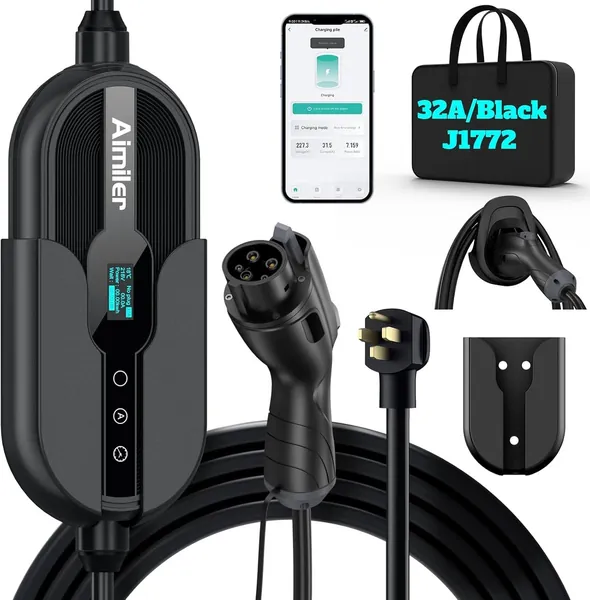
No. Many portable chargers can be set lower to match a 20, 30, or 40 A circuit. Check the listing and manual, and have your electrician set and label it.
Does a full panel mean I can’t charge at home?
Not necessarily. Level 1 on a dedicated approved outlet, a smaller Level 2 circuit, or load management may still work. Compare: Level 1 vs Level 2.