Outlet first, charger second.
Never use a household extension cord for EV charging, and never run a cord from a balcony, window, or patio door to the parking stall. If the receptacle is in the wrong place or the wrong type, the fix is a new receptacle installed by a licensed electrician. More:
extension-cord safety.
Why a bigger charger doesn’t fix a capacity problem
A charger’s rating is a ceiling, not a supply. A 40 A charger on a circuit sized for 24 A must be set to 24 A. If the building’s parking feed can’t take more load, the fix is managing the load you have, not buying a larger unit. The Canadian Electrical Code permits energy management systems to control EV charger loads (Rule 8-500; see ESA Bulletin 86-1-7 in Ontario).
Four ways buildings manage EV load
| Approach | What it does | Who usually arranges it | What you buy | Watch for |
|---|
| Suite energy management device | Watches your suite panel and slows or pauses charging when the stove, dryer, or heat runs | You, with board or landlord approval and an electrician | Charger plus a monitoring device your electrician approves | Must be approved for use in Canada; electric heat leaves less room in winter |
| Building-wide load sharing | Networked chargers split a fixed parking feed among the cars plugged in | The condo corporation or owner, often through a vendor | Usually the building’s chosen charger, or one it supports | Ask which chargers are supported before buying your own |
| Fixed smaller circuit per stall | Each stall gets its own modest circuit (e.g., 20–30 A) with the charger set to match | Board or owner, sized by an electrician | Any charger that can be set to that circuit | Simple, but each car is capped all the time |
| Scheduling only | Charging limited to overnight hours | Board rules or your own app schedule | A charger with scheduling | Helps peak demand, but doesn’t create capacity by itself |
What each car gets when power is shared
Illustrative arithmetic only: assume a parking feed where an electrician allows 80 A of continuous EV load at 240 V, shared evenly. Your building’s numbers will differ.
| Cars charging at once | Current each | Power each | Energy each in 10 h |
|---|
| 2 | 40 A (if the charger allows) | 9.6 kW | about 96 kWh |
| 4 | 20 A | 4.8 kW | about 48 kWh |
| 8 | 10 A | 2.4 kW | about 24 kWh |
| 13+ | below about 6 A | — | Systems typically rotate cars instead, since chargers can’t run that low |
In practice, cars arrive at different times and many finish early, so shared systems often deliver more per car than an even split suggests. Even the 8-car row still adds more energy overnight than many daily commutes use.
What to buy while the board decides
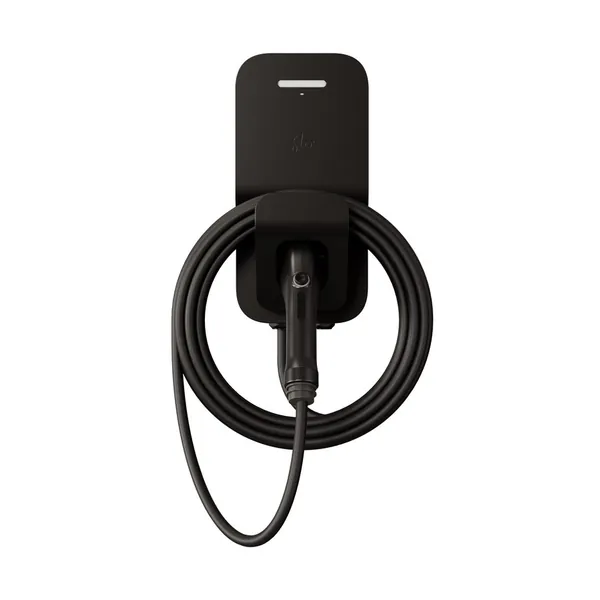
- If a building system is coming: wait, or ask in writing which chargers it supports. A charger that doesn’t talk to the system may not be allowed on it.
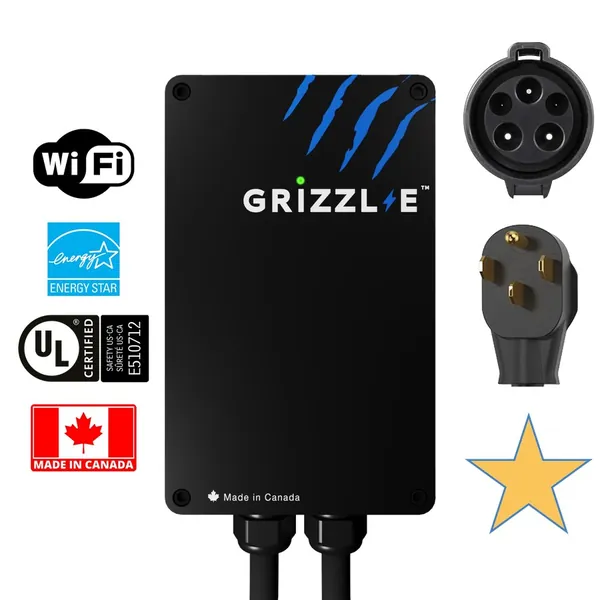
- If you’ll get a fixed smaller circuit: pick a charger with adjustable current that matches it. The listings below show setting ranges.
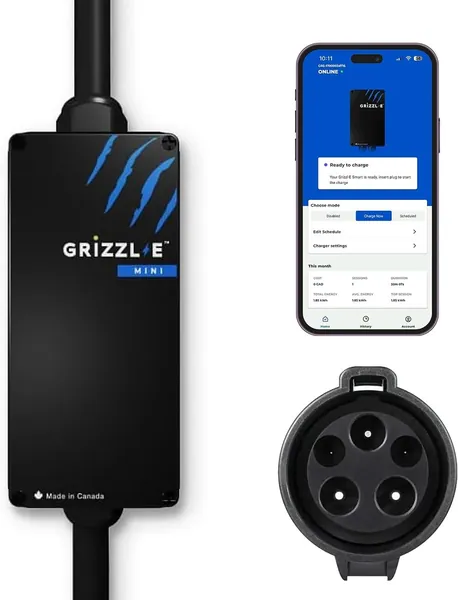
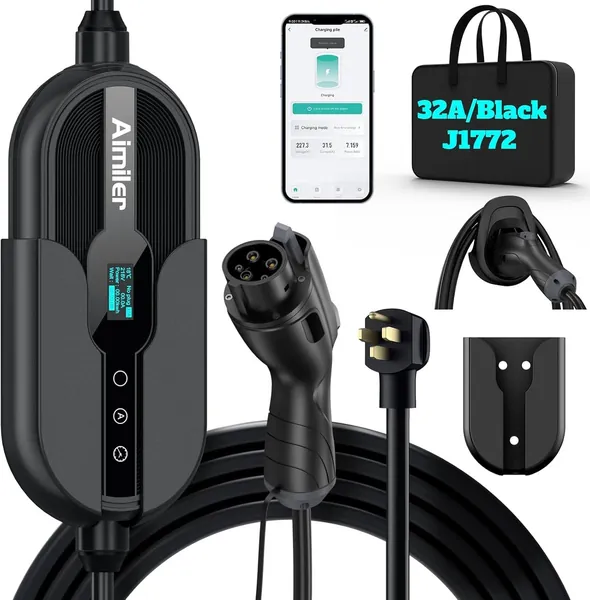
- If you’re a renter who may move: a plug-in unit you can take with you is usually easier to approve. See portable vs hardwired.
Questions to put to your board or property manager
- Has the building had an electrical capacity study for EV charging, and what did it allow for parking?
- Is load management planned for the whole garage or only per suite?
- Which chargers or networks will be supported, and who pays for the unit, install, and electricity?
- In Ontario: what goes in the written agreement? Ontario’s condo rules require it to allocate install costs and repair, maintenance, and insurance duties. Process: Ontario condo request · condo board approval.
Outlet and amp caveats
- Set the charger to about 80% of its breaker (Rule 86-302), whatever load management does on top.
- Never share a circuit with a splitter or a dryer plug to “add” a second car. Sharing must be designed in by an electrician using equipment built for it.
- Suite panel room doesn’t prove building room. The building’s service and parking feed are separate questions: 100 A panel sizing.
- Smart charger apps that schedule charging are not the same as approved load management; ask your electrician which one your setup needs.
Caveats
- The sharing table is simple arithmetic to show the pattern, not a design.
- Approved devices, utility rules, and permit requirements vary by province.
- Vendor and network compatibility changes; confirm with the building before you buy.
- Hire a licensed electrician and get a permit where required; don’t DIY.
FAQ
What is EV load management in a condo?
Equipment that limits or shares EV charging power so the total stays within what the suite panel or building feed can carry. It can be per suite or across the whole garage.
Will a bigger EV charger charge faster in my condo?
Not if the circuit or building is the limit. The charger must be set to match its circuit, so a larger unit just runs at the same capped current.
How much charge does each car get with shared charging?
It depends on the feed and how many cars are plugged in. As an example, 80 A shared by 8 cars is about 10 A each, roughly 24 kWh in 10 hours.
Can I buy my own charger if my building plans load sharing?
Ask first. Building systems often support only certain chargers or networks. Get the supported list in writing before you buy.
Is load management allowed in Canada?
Yes. The Canadian Electrical Code permits energy management systems to control EV charger loads. Your electrician confirms the approved equipment and permit where you live.