Outlet first, charger second.
Never use a household extension cord for EV charging, and never run a cord from a balcony, window, or patio door to the parking stall. If the receptacle is in the wrong place or the wrong type, the fix is a new receptacle installed by a licensed electrician. More:
extension-cord safety.
The short answer
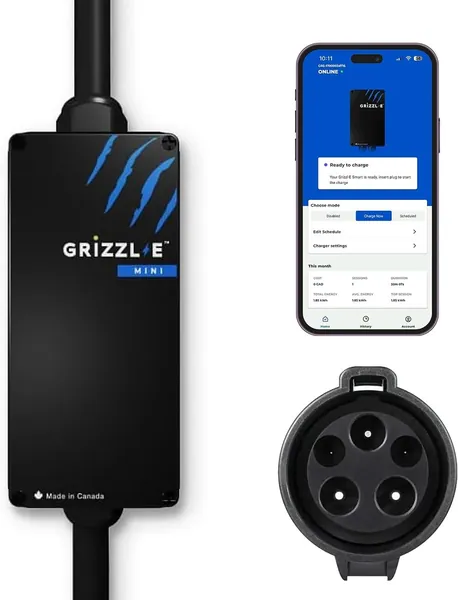
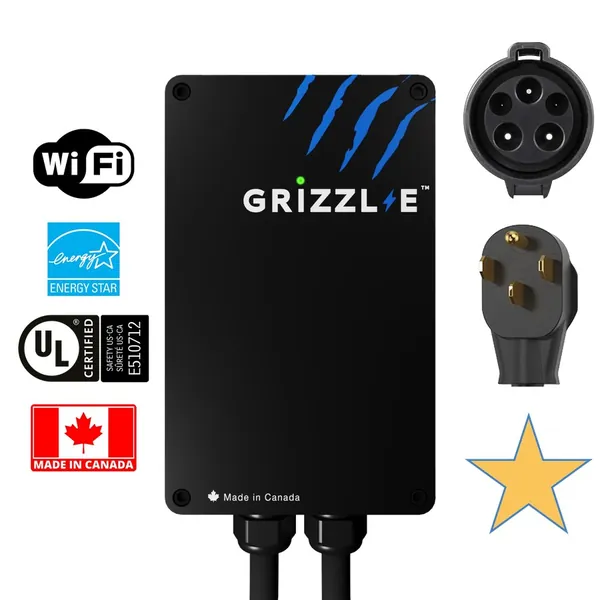
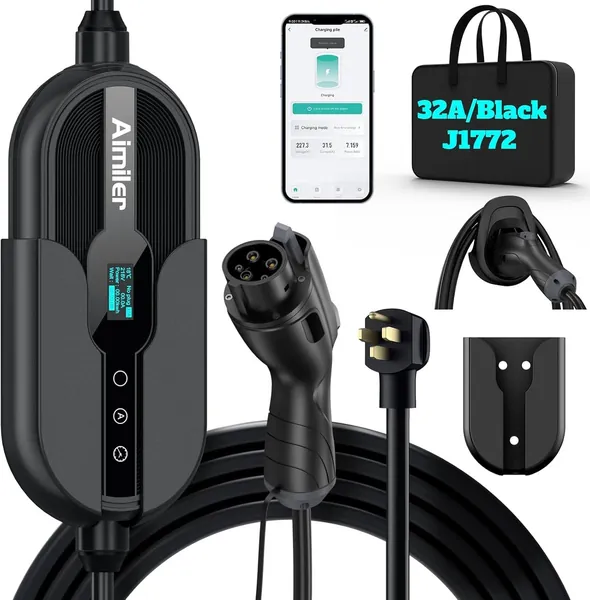
For most renters and condo owners who plan to use a portable plug-in charger, ask for a dedicated NEMA 14-50 with a continuous-load-rated receptacle. It is the plug most portable Level 2 chargers on Amazon.ca ship with, including the Grizzl-E Mini Connect, Grizzl-E Classic Connect and AIMILER 32A listed below. A NEMA 6-50 can make sense when the electrician prefers it (no neutral is needed) and your charger has a 6-50 version or a manufacturer-supplied 6-50 adapter (the Grizzl-E Mini Connect listing includes one). Either way, confirm the plug on the exact listing before you buy.
14-50 vs 6-50 side by side
Directional only. Your electrician sets the breaker, wire size, and receptacle. The Canadian Electrical Code treats an EV charger circuit as a continuous load (Rule 86-302), which is why a charger on a 50 A circuit is typically set to about 40 A. Your electrician confirms the setting.
|
NEMA 14-50 |
NEMA 6-50 |
| Voltage | 240 V (also has a 120 V leg via neutral) | 240 V only |
| Prongs | 4: two hots, neutral, ground | 3: two hots, ground (no neutral) |
| Circuit | Typically 50 A dedicated | Typically 50 A dedicated |
| Typical EV current | Up to about 40 A Level 2 | Up to about 40 A Level 2 |
| Wiring note | Needs a neutral conductor run to the stall | No neutral conductor needed — ask your electrician whether that matters for your run |
| Portable chargers that fit | Most plug-in Level 2 units on Amazon.ca ship with a 14-50 plug | Fewer; only versions sold with a 6-50 plug |
| Visiting cars / next tenant | More widely recognised; also used for RVs | Common for welders; fewer EV owners carry a 6-50 plug |
| Best fit | Renters with a portable charger who may move | Electrician-led choice when the charger matches |
Outlet and amp caveats before you ask
- Dedicated circuit only. Neither receptacle should be shared with a dryer, range, or block heater. Say “dedicated” in your request.
- Continuous-load-rated receptacle. Cheap receptacles can overheat under hours of EV load. Ask for an industrial or EV-grade receptacle, and check the plug for heat marks over the first weeks.
- Set the charger to the circuit. On a 40 A circuit, a 14-50 or 6-50 receptacle may still be installed, but the charger must be set to 32 A or lower. Your electrician confirms the setting and labels the circuit.
- Don’t improvise adapters. Third-party plug adapters may not be covered by the charger’s certification or warranty. Use only adapters the charger maker supplies for that model, buy the matching charger version, or ask for the matching receptacle.
- Outdoors: ask for an in-use (bubble) weatherproof cover and a mounting height above snow and slush. Detail: outdoor parking stall guide.
- Permits: a new 240 V receptacle normally needs a licensed electrician and a permit or inspection (in Ontario, a licensed electrical contractor with an ESA permit; elsewhere, check your provincial or municipal electrical safety authority).
What to write in your request
- Name the receptacle
“A dedicated 50 A circuit with a continuous-load-rated NEMA 14-50 receptacle (or 6-50 if the electrician prefers) at stall #__, for a certified plug-in charger I own.”
- Offer to cover agreed costs
Say you will pay the agreed install cost and use a licensed electrician with a permit. See EV outlet cost and who pays.
- Ask the capacity question
Ask whether the building or suite panel has room for a 50 A circuit, or whether a smaller circuit or load management is needed. See amp sizing on a 100 A panel.
- Get the answer in writing
Confirm who owns and maintains the receptacle and what happens at move-out. Structure: landlord letter guide.
Caveats
- Amp figures are typical examples. Your electrician and the charger manual decide the breaker and current setting.
- Product plug types change between listing versions. Confirm “NEMA 14-50” or “NEMA 6-50” on the exact Amazon.ca listing you buy.
- Code and permit rules vary by province. Hire a licensed electrician; don’t DIY a 240 V receptacle.
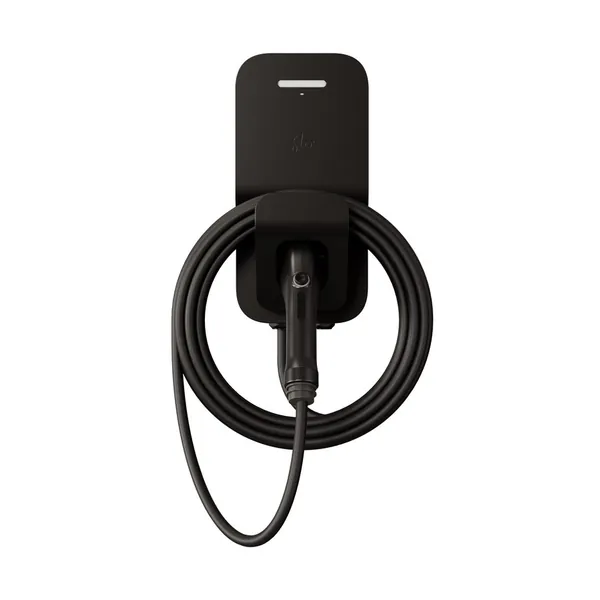
- A hardwired charger (like FLO Home X3) skips the plug question entirely, but it is permanent and usually needs a written agreement.
FAQ
Is NEMA 14-50 or 6-50 better for EV charging in an apartment?
For most renters with a portable charger, NEMA 14-50 is the safer ask because most plug-in Level 2 chargers on Amazon.ca ship with a 14-50 plug. A 6-50 works just as well electrically when your charger is sold in a 6-50 version. Your electrician makes the final call.
Do 14-50 and 6-50 charge at the same speed?
On the same 50 A dedicated circuit, both typically allow up to about 40 A of continuous charging. The car’s onboard charger and the charger’s current setting matter more than the plug shape.
Can I use an adapter between a 14-50 plug and a 6-50 receptacle?
We don’t recommend third-party adapters: they may not be covered by the charger’s certification or warranty and add a heat point. Use a manufacturer-supplied adapter for that model (the Grizzl-E Mini Connect listing includes a NEMA 6-50P adapter), buy the matching charger version, or ask for the matching receptacle.
Why would an electrician suggest a 6-50?
A 6-50 does not need a neutral conductor, so ask your electrician whether that matters for a long run to your stall. Ask them to compare both for your building.
Can I plug into an existing dryer or range outlet instead?
Only if an electrician confirms the circuit is dedicated, suitable for continuous EV load, and you set the charger to match it. Never run a household extension cord or a balcony cord to reach it. See outlet guide.