Outlet first, charger second.
Never use a household extension cord for EV charging, and never run a cord from a balcony, window, or patio door to the parking stall. If the receptacle is in the wrong place or the wrong type, the fix is a new receptacle installed by a licensed electrician. More:
extension-cord safety.
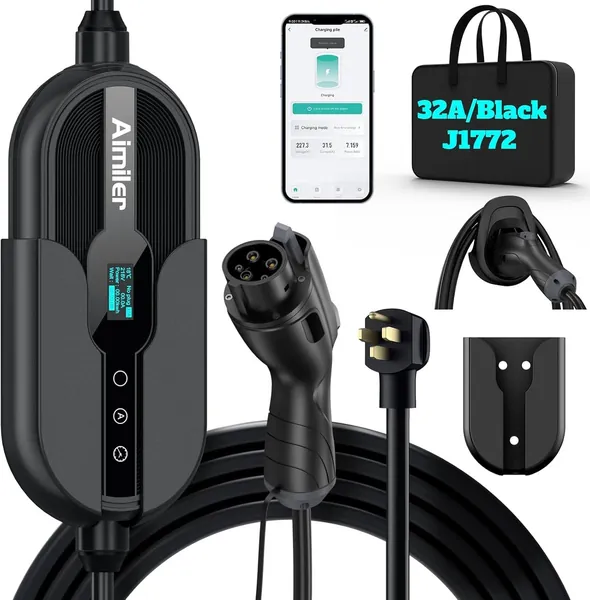
A plug-in charger can go wherever there is a matching receptacle. A hardwired charger is part of the building’s wiring, so taking it with you means paying an electrician twice: once to remove it safely and once to install it again. Which one you have decides most of your moving plan.
Can your charger come with you?
| What you have now | Take it? | What to plan for |
|---|
| Cord that came with the car (Level 1) | Yes | Needs a suitable 120 V outlet within reach at the new stall |
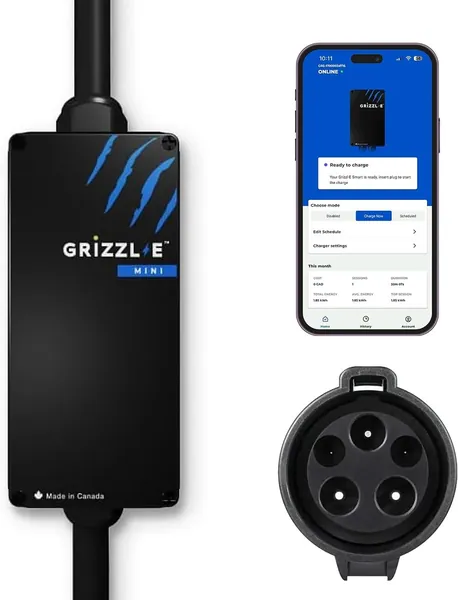
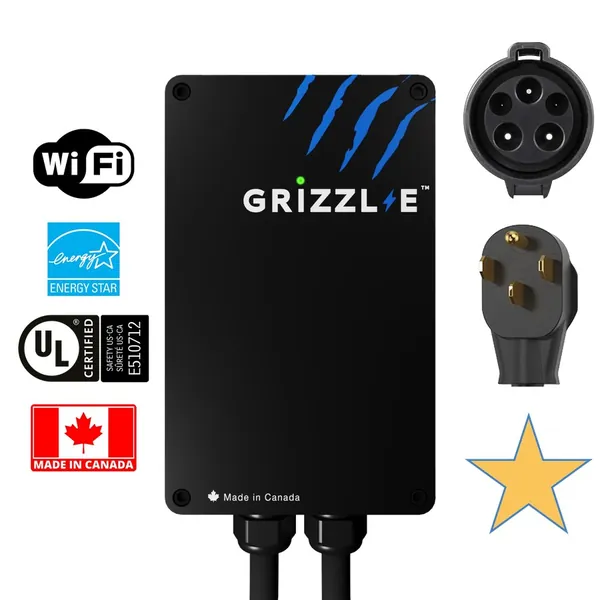
| Plug-in Level 2 (NEMA 14-50 or 6-50) | Yes | New stall needs the same receptacle type, or a licensed electrician installs one |
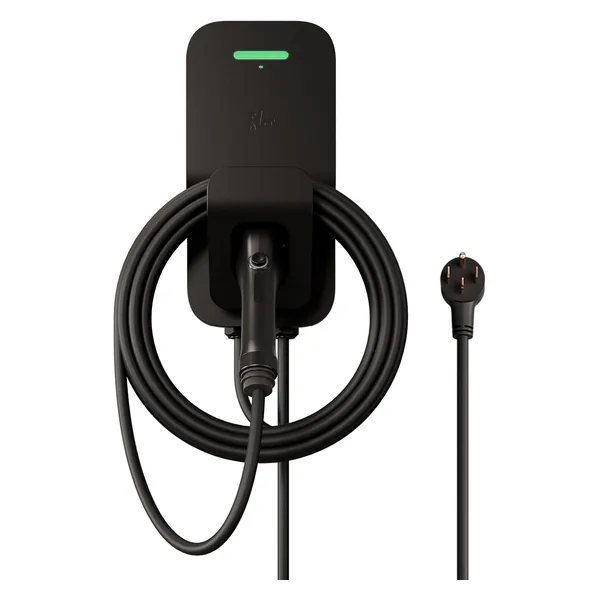
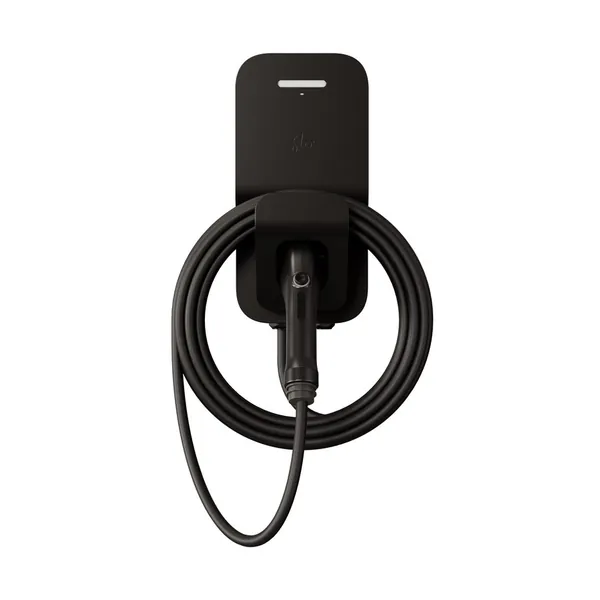
| Hardwired Level 2 you own | Possibly | Electrician removes it and makes the old circuit safe; check your lease or condo agreement on who owns installed fixtures |
| Charger supplied by the building or landlord | No | It stays; ask what the new building provides |
Questions to ask before you sign
| Ask | Why it matters | Good answer looks like |
|---|
| Is there power at my assigned stall, and what kind? | Decides Level 1, Level 2 or nothing | A named receptacle type (e.g. 14-50) or an EV-ready circuit |
| Can I install or plug in a charger, and who approves it? | Rentals need landlord consent; condos need board approval | Written permission or a clear approval process |
| Who pays for the electricity, and how is it measured? | Avoids disputes later | Sub-meter, metered charger, or a set monthly fee in writing |
| Is the stall assigned to me or shared? | A shared stall may not allow a personal charger | A deeded or assigned stall |
| Is there a waitlist for EV stalls? | Some buildings have more EVs than outlets | A date, not "eventually" |
Moving checklist (Ontario first)
- Get charging terms in writing in the lease or condo approval before move-in.
- At the old place: if a hardwired charger is coming with you, book a licensed electrician to remove it and leave the circuit safe. In Ontario, electrical work needs an ESA permit; other provinces have their own rules.
- Keep your charger manual, receipt and any permit or inspection paperwork; the new building and your insurer may ask for them (see charger and insurance).
- At the new place: confirm the receptacle type and breaker size, then set your charger to match before the first session.
- Never bridge a gap with an extension cord or adapter while waiting for a proper outlet; use public charging instead (Ontario public charging cost).
Outlet and amp caveats
- A NEMA 14-50 receptacle is on a 50 A circuit at most, so plug-in chargers stop at 40 A continuous (Canadian Electrical Code Rule 86-302, about 80% of the breaker). A 6-50 works the same way for chargers with that plug.
- A plug-in charger set to 32 A needs a 40 A circuit; 24 A needs 30 A. Set the charger to match the breaker, never higher.
- Hardwired chargers above 40 A need a larger circuit sized by your electrician after a load calculation.
- New circuits need a licensed electrician and the permit your province requires (in Ontario, an ESA permit).
Caveats
- Ownership of installed fixtures depends on your lease, condo documents and provincial law; check yours.
- Condo and tenancy rules on EV charging differ by province. Nothing here is a statement of what your landlord or board must allow.
- Plug adapters between receptacle types are not a substitute for the right outlet.
FAQ
Can I take my EV charger when I move?
A plug-in charger, yes. A hardwired charger can be removed by a licensed electrician, but check your lease or condo agreement first, since installed fixtures may belong to the unit.
What should I ask a landlord about EV charging before signing?
Ask what power is at your stall, whether you may charge or install a charger, who pays for electricity and how it is measured, and whether the stall is assigned to you. Get the answers in writing.
Will my NEMA 14-50 charger work in my new building?
Only if the new stall has a NEMA 14-50 receptacle on a suitable circuit. If not, a licensed electrician must install one; do not use an adapter or extension cord.
Do I need a permit to reinstall a hardwired charger in Ontario?
Electrical work in Ontario generally needs an ESA permit, arranged by your licensed electrician. Other provinces have their own permit rules.
What if my new condo has no EV charging yet?
Use the condo board approval process and public charging in the meantime. Our condo board approval guide walks through the request.