Renter honesty first.
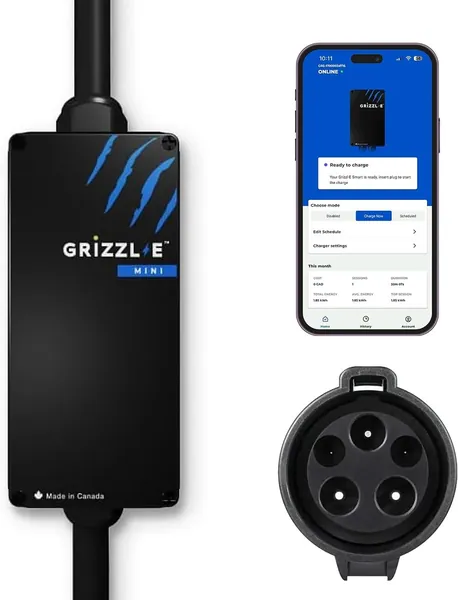
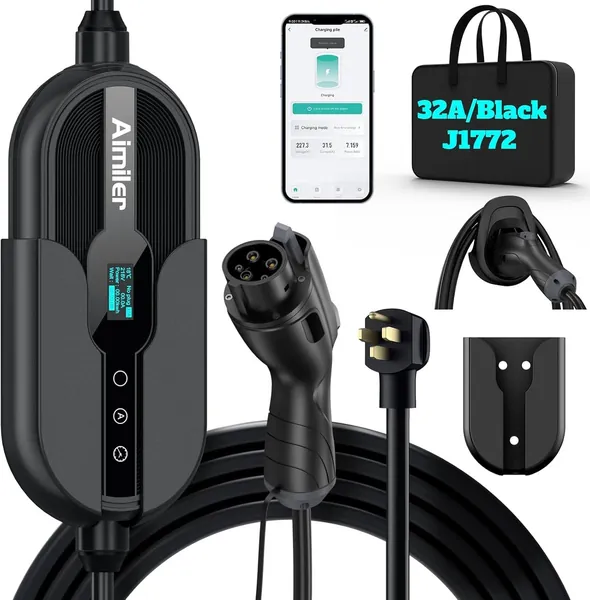
Buying a portable Level 2 EVSE does
not create a right to a 14-50 receptacle. In typical Canadian apartments you need
landlord / property-manager written permission (and often condo / strata process if you own). There is
no blanket Canada-wide “right to charge” for tenants. Start with permission, then hardware. See
Renter Playbook.
30-second decision
Level 1 may be enough if…
Short daily km (many city drivers under ~40–60 km/day), you can plug into a permitted 120V outlet overnight most nights, and you’re fine topping up with workplace / public L2 on heavier weeks. Winter buffer still matters — see below. To make it work: dedicated 15 A or 20 A Level 1 circuit.
Push for Level 2 if…
Longer commute, cold winters that eat range, weekend road trips, only one charging night mid-week, or shared public stalls are unreliable. Portable L2 on a dedicated continuous-load-rated NEMA 14-50R is the durable apartment upgrade this site recommends.
What the outlets actually allow
| Outlet / path |
Typical use |
Apartment reality |
| NEMA 5-15 / 5-20 (120V) |
Level 1 trickle — rough ~5–8 km of range per hour of charge model / temp |
OK only if the outlet is yours to use, in good condition, and permitted. Not a Level 2 path. |
| NEMA 14-30 |
Sometimes discussed for slower L2 |
Not automatic. Electrician must confirm load, shared dryer circuits, and receptacle suitability. |
| NEMA 14-50 / 14-50R |
Preferred plug-in Level 2 target in Canada |
Ask for a dedicated continuous-load-rated receptacle — see outlet guide. |
| Hardwired wallbox |
Fixed L2 |
Often harder for renters (ownership / restoration). Prefer plug-in portable when the building allows a 14-50R. |
Never “upgrade” Level 1 with a household extension cord.
Do not daisy-chain cords from a balcony, window, or hallway plug to the stall. Do not use indoor household extension cords for EV charging. Those shortcuts create fire, trip, and insurance risk — and they kill landlord goodwill. Full caveat page:
Extension-cord EV charging safety.
When Level 1 overnight is honestly enough
- You recover more km overnight than you drive most weekdays
- You have a reliable permitted 120V plug at or beside your stall (or another approved location)
- You accept slower recovery after a cold snap or a long day
- You keep a public / workplace backup for outliers
OEM Level 1 cords and listed dual-voltage EVSEs used on 120V are fine when the outlet path is approved. Speed is the trade-off — not “free power without permission.”
When you need Level 2
- Daily driving regularly exceeds what overnight L1 can restore
- Winter range loss (~25–35% directional hedge; model-dependent) makes L1 too tight
- You share a household that needs the car ready every morning
- Public L2 / DCFC would otherwise become your default (cost and time add up — Public vs portable)
For apartments, the ask is usually: dedicated continuous-load-rated NEMA 14-50R + your own weatherproof listed portable Level 2 EVSE. Removable if you move. Details: NEMA 14-50 outlet guide.
Amp / breaker themes (high level — electrician decides)
Portable L2 units commonly discuss ~16–40A continuous themes on 240V circuits. Continuous EV load is treated differently than a short dryer cycle — that is why receptacles, wire, and breakers matter. Do not self-size a panel from a blog. A licensed electrician does the load calculation and permit path for your province.
Practical next steps
- Audit your week — km driven, nights you can plug in, winter buffer.
- Photo the outlet / stall — what exists today; what is missing.
- If L1 is enough for now — use listed gear on a permitted 120V outlet; keep public backup.
- If L2 is the goal — written landlord / board ask for a dedicated continuous-load-rated 14-50R; then buy portable L2.
- Never balcony cords, household extension cords, or DIY circuits.