The one rule that matters more in winter.
Cold weather is when people invent shortcuts. Never use a household extension cord for EV charging, and never run a cord from a balcony, window, or patio door to the parking stall. If the outlet is in the wrong place, the fix is a receptacle installed near the stall by a licensed electrician. More:
extension-cord safety.
Why fall is the time to do this
- Permission takes weeks, not days. In Ontario, owner applications under O. Reg. 48/01 commonly give the condo corporation 60 days to respond to a complete application, and an accepted install commonly needs a written agreement within 90 days after that. Start in September or October, not December. Detail: Ontario condo EV charger request.
- Outdoor electrical work is easier before the ground and walls freeze. Trenching, conduit on exterior walls, and pedestal work in surface lots are simpler to schedule in the fall. Ask your electrician what their winter limits are.
- Cables and seals are easier to inspect when they are warm and dry. Cold makes jackets stiff and hides cracks; meltwater and road salt make small damage worse.
Fall prep at a glance: outlet, amps, install type, and who to ask
Directional only. Your electrician sets the breaker and the charger’s current limit. EV charging counts as a continuous load, so a charger is normally set to about 80% of the breaker rating (for example, 40 A on a 50 A circuit).
| What’s at your stall |
Typical amp reality |
Portable or hardwired? |
Who to ask |
Fall task |
| Nothing yet |
— |
Decide first: a portable plug-in charger on a new receptacle is usually the smaller ask |
Landlord / property manager (renters) · condo board or property management (owners) |
Send the written request now; photograph the stall and the nearest electrical room or panel |
| 120 V outlet (NEMA 5-15 / 5-20, often a block-heater plug) |
Level 1 only; about 12 A on a 15 A circuit or 16 A on a 20 A circuit |
Portable only (Level 1 mode) |
Landlord or board: is the circuit dedicated, not timer-controlled, and approved for EV use? |
Check the weatherproof cover closes, the receptacle is not cracked or loose, and there is no heat discolouration |
| NEMA 14-30 (dryer-style, 30 A) |
About 24 A Level 2 if an electrician confirms the circuit is suitable |
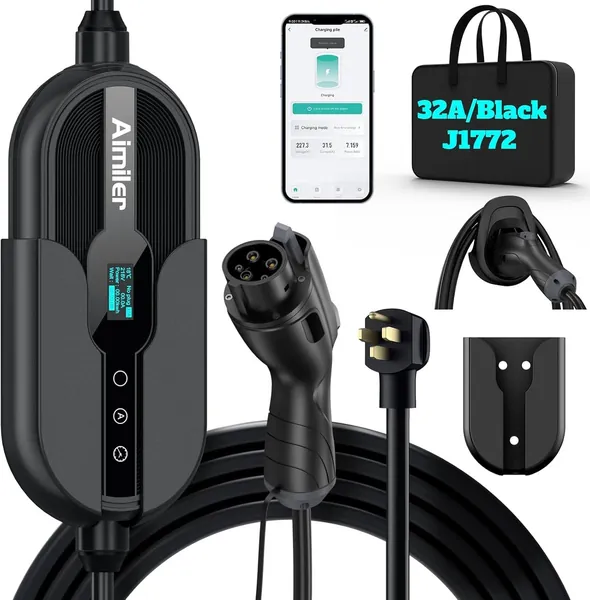
Portable plug-in, with charger current set to match |
Electrician first, then landlord or board |
Confirm it is a dedicated circuit and not shared with another load |
| NEMA 14-50 (50 A, dedicated) |
Up to about 40 A Level 2 |
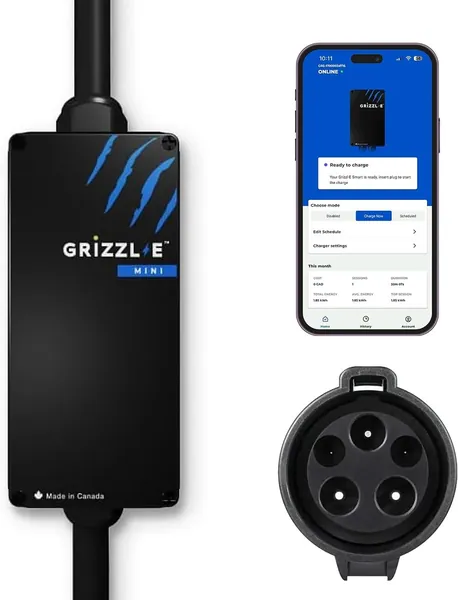
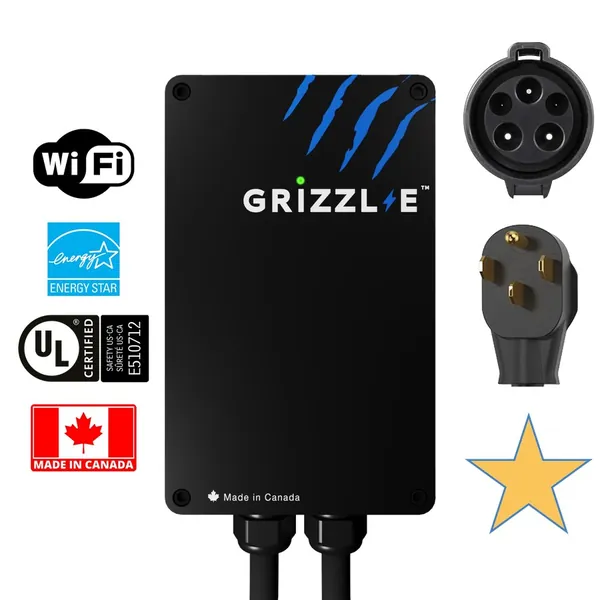
Portable plug-in (Grizzl-E Mini Connect or Classic Connect class) |
Already approved? Confirm in writing who maintains the receptacle |
Ask for a continuous-load-rated receptacle and an in-use (bubble) weatherproof cover if it is outdoors; keep the plug out of standing water |
| Hardwired wall unit |
Depends on the dedicated circuit your electrician installs |
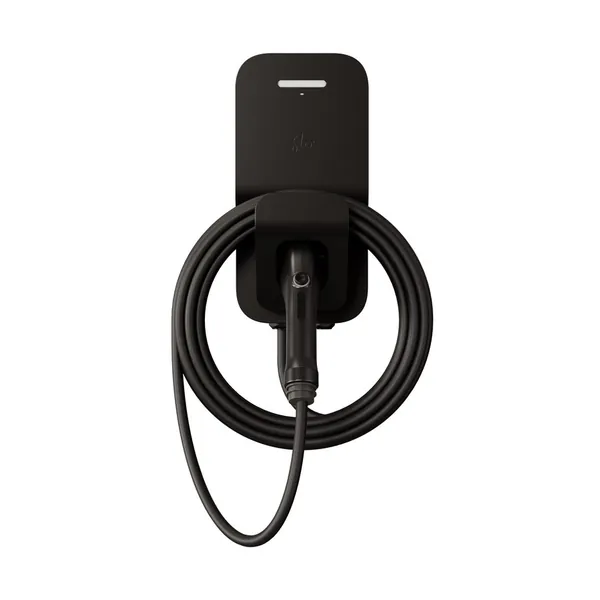
Hardwired and permanent (FLO Home X3 class) |
Condo board or landlord, usually with a written agreement on ownership, costs, and removal |
Book the electrician and permit before outdoor work gets hard |
| Shared building chargers |
Set by the building’s system |
Neither — building-owned |
Property manager |
Ask about winter snow clearing around the chargers, booking rules, and billing before you rely on them |
Outlet details: NEMA 14-50 & outlet guide. Which Level 2 path to pick: apartment Level 2 without a garage.
1. Cord and connector care
-
Inspect the whole cable in daylight
Run your hand along the jacket from the charger to the handle. Look for cuts, flattened spots from tires or doors, and kinks. Damaged cable means the unit comes out of service until the maker or a qualified repair confirms it.
-
Check the connector and the wall plug
Pins should be straight and clean, the latch should click, and the plug that goes into the receptacle should show no browning, melting, or looseness. Heat marks at the wall plug are a stop sign — call an electrician to check the receptacle.
-
Clean and dry, never lubricate
A dry cloth or soft brush is enough. Don’t spray cleaners or lubricants into the pins unless the manufacturer says so.
-
Holster it, connector down
A holster keeps meltwater, road salt, and grit out of the handle. The Grizzl-E Mini Connect listing includes a holster and cable management kit; other chargers vary — check what is in the box.
-
Plan the cable route for snow
Route the cable where it won’t be driven over, shovelled, or buried by plows. Don’t leave loops across walkways or drive aisles.
2. Outdoor outlet and stall weather prep
- Covers: an outdoor receptacle used while something is plugged in should have an in-use (“bubble”) weatherproof cover — your electrician confirms what code requires. Ask the landlord or board to replace cracked or missing covers now.
- Mounting height and splash: the charger and receptacle should sit where snowbanks, plows, and salty slush won’t reach them. Your electrician decides the final location.
- Snow clearing: tell property management where the charger and cable sit so plow operators avoid them. Ask whether a bollard or wheel stop is needed.
- Lighting: plugging in at 6 p.m. in December is dark. A lit stall makes cable inspection and safe handling easier.
- Underground garages: less snow, but more salty meltwater from other cars. Keep the connector holstered and the cable off the floor where building rules allow.
- Check the charger’s rating: use a charger rated for outdoor use and for Canadian cold. The Grizzl-E and FLO listings below state an outdoor-rated enclosure and a cold operating range (down to −30 °C for Grizzl-E, −40 °C for FLO Home X3). For any charger, confirm on the live listing and in the manual.
3. Get permission in writing before the cold
The table above shows who to ask. What to send:
-
A short, specific request
Your unit and stall number, what you want (for example, a dedicated continuous-load-rated NEMA 14-50 at the stall for a plug-in weatherproof charger you own), and that you will pay agreed costs and use a licensed electrician. Structure: landlord letter guide.
-
Owners: use your province’s process
Ontario condo owners follow the O. Reg. 48/01 application path; BC strata owners have their own rules — see BC strata; Québec: Écorecharge guide. Canada-wide map: condo board approval.
-
Renters: expect a negotiation
Most provinces do not give tenants a general right to install EV charging. Offer to cover costs, suggest the removable portable option, and keep a public-charging backup. See the renter playbook.
-
Get the answer in writing
Email is fine. Confirm who owns the receptacle, who maintains it, how electricity is billed, and what happens when you move out.
Caveats
- Amp figures above are typical examples. Your electrician and the charger manual decide the actual breaker size and current setting.
- Condo timelines above are the commonly cited Ontario ones. Confirm the current regulation and the Condominium Authority of Ontario guide before you rely on a date; other provinces differ.
- Permit and inspection rules vary by province (ESA in Ontario, provincial or utility inspection offices elsewhere). Hire a licensed electrician; don’t DIY.
- Winter range loss varies widely by vehicle. Use your own car’s data — see winter portable L2.
- We don’t list rebate amounts on this page because programs open and close often. Check your province and utility directly.
FAQ
When should I ask my condo board or landlord for EV charging before winter?
As early in the fall as you can. In Ontario, an owner application under O. Reg. 48/01 commonly gives the corporation 60 days to respond once the package is complete, and an accepted install commonly needs a written agreement within 90 days after that — so an application sent in late October can easily run past the first hard freeze. Renters have no set timeline, which is another reason to start early. Process: condo board approval · Ontario condo request.
What should I check on my EV charging cable and connector in the fall?
Look for cracks or flattened spots in the cable jacket, bent or discoloured pins, a loose latch, grit in the handle, and any heat marks on the plug that goes into the wall. Clean the handle with a dry cloth, store it in a holster with the connector facing down, and stop using the unit if anything looks melted, smells hot, or trips the breaker.
Can I use a household extension cord or run a cord from my balcony to reach my stall this winter?
No. Household extension cords are not rated for hours of continuous EV load, and balcony or window drops create trip, pinch, and water hazards in snow season. If the outlet is too far away, the fix is a properly installed receptacle near the stall. See extension-cord safety.
Is a block-heater outlet in my outdoor stall good enough for EV charging?
Not automatically. Block-heater receptacles are usually 120 V, may be shared or timer-controlled, and were not planned for all-night EV load. Ask the landlord or board in writing whether the circuit is dedicated and approved for EV use before you plug in anything. A dedicated NEMA 14-50 installed by a licensed electrician is the usual Level 2 ask.
Portable or hardwired Level 2 — which is easier to get approved before winter?
In many rentals and condos a plug-in portable charger on a dedicated, continuous-load-rated NEMA 14-50 is the smaller ask: the building owns the receptacle and you take the charger when you move. Hardwired units like FLO Home X3 are permanent and usually need a formal agreement. Decision guide: portable vs hardwired.
What should I do if permission will not come through before the cold?
Plan a bridge: Level 1 on an approved outlet if you have one, workplace charging, and public Level 2 or fast charging. Keep your written request moving so you are ready by spring. Honest comparison: public vs portable.