Outlet first, charger second.
Never use a household extension cord for EV charging, and never run a cord from a balcony, window, or patio door to the parking stall. If the receptacle is in the wrong place or the wrong type, the fix is a new receptacle installed by a licensed electrician. More:
extension-cord safety.
What a dedicated 120 V circuit delivers overnight
An EV charger is a continuous load under the Canadian Electrical Code (Rule 86-302), so it typically draws about 80% of the breaker: 12 A on a 15 A circuit, 16 A on a 20 A circuit. Figures below are simple volts × amps at 120 V, before charging losses. The distance column uses an example car at 20 kWh per 100 km; use your own car’s number.
| Circuit | Charging draw | Power | 10 h plugged in | 12 h plugged in | 14 h plugged in |
|---|
| 15 A, 120 V (NEMA 5-15) | 12 A | 1.44 kW | 14.4 kWh · ~72 km | 17.3 kWh · ~86 km | 20.2 kWh · ~101 km |
| 20 A, 120 V (NEMA 5-20) | 16 A (only if the charger supports it) | 1.92 kW | 19.2 kWh · ~96 km | 23.0 kWh · ~115 km | 26.9 kWh · ~134 km |
| For comparison: 30 A, 240 V (Level 2) | 24 A | 5.76 kW | 57.6 kWh | — | — |
Real results are lower: Level 1 loses a larger share to charging overhead, and in a Canadian winter the car spends energy warming the battery and cabin. Treat the distance column as a best case, then compare it with your actual daily driving.
“Dedicated” has to mean dedicated
- One circuit, one receptacle, one car. Nothing else on that breaker: no stall lights, no neighbour’s block heater, no garage door opener. Canadian Electrical Code Rule 86-300 calls for a dedicated branch circuit for EV supply equipment.
- At the stall, not near it. The receptacle should be within reach of your car’s cord without anything in between. If it isn’t, the fix is moving or adding a receptacle, never an extension cord.
- Outdoor-rated where outdoors. Outdoor stalls need a weather-resistant receptacle with an in-use cover; your electrician decides GFCI protection and mounting.
- Not on a timer. Block-heater outlets are often on timers or shared circuits. A block-heater plug is not automatic approval for EV charging.
Which plug and setting you can actually use
- Car-supplied cords: many draw about 12 A on a 5-15 plug. Check yours; some let you lower the current, which helps on older wiring.
- 16 A Level 1 needs a 5-20 plug and a charger that supports it. A 5-15 plug in a 5-20 receptacle still means a 12 A setting.
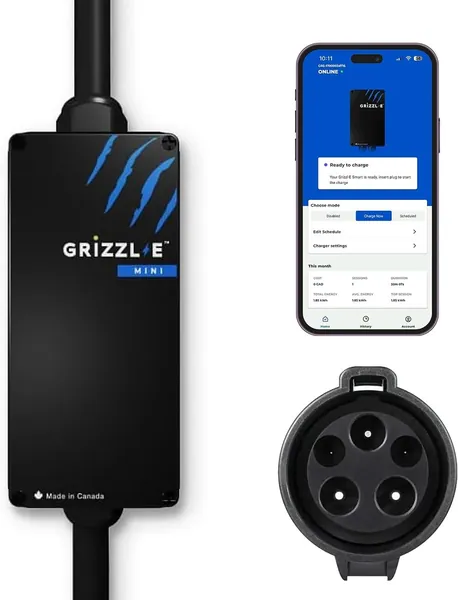
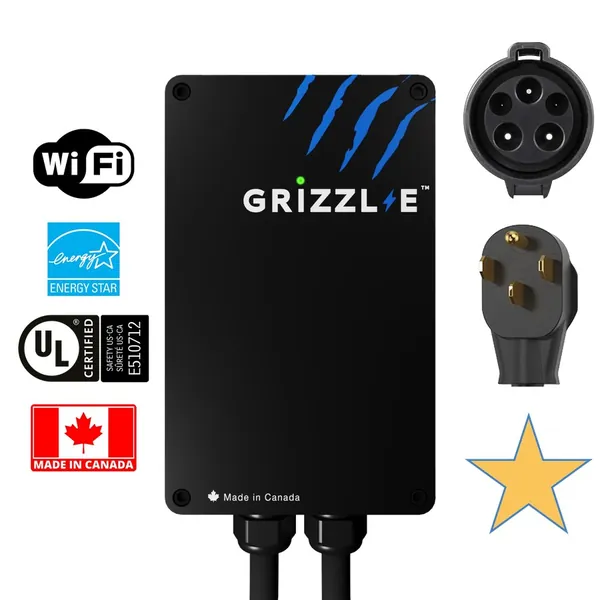
- Portable Level 2 units that also do Level 1: the Grizzl-E Mini Connect listing says it auto-detects 120 V or 240 V and ships with a maker-supplied 5-15P adapter. Use the current setting its manual gives for that adapter. Don’t use third-party adapters.
Ask for Level 1 so Level 2 is easier later
- Ask for a dedicated 20 A circuit, not 15 A. It gives headroom and, depending on the run, the electrician may be able to reuse the route later.
- Ask whether the wire run could later carry a 240 V circuit. Only the electrician can answer, but asking now can save a second install. Compare: 14-50 vs 6-50.
- Put it in writing. Who pays, who owns the receptacle at move-out, and how electricity is billed. Template: landlord request letter; costs: outlet cost and who pays.
Outlet and amp caveats
- A 15 A circuit that also feeds other loads is not a charging circuit; the breaker will trip or, worse, wiring will run hot.
- Old or loose receptacles heat up under hours of continuous draw. If the plug or faceplate is warm, discoloured, or the breaker trips, stop and call an electrician.
- Level 1 on a full panel is often approved when Level 2 isn’t, but it still needs a load check. See 100 A panel sizing.
- In Ontario, overnight time-of-use or ultra-low overnight pricing can make long Level 1 sessions cheaper if you pay your own hydro: Ontario overnight rate.
When Level 1 isn’t enough
If your daily driving regularly exceeds what the table shows, if you park for less than about 10 hours, or if winter mornings leave you short, push for Level 2. The decision guide is Level 1 vs Level 2; for renters with an approved 240 V outlet, start with portable Level 2 for apartments.
Caveats
- Table figures are arithmetic, not a measurement of your car. Losses and cold weather reduce them.
- The 20 kWh per 100 km figure is only an example; small cars use less, trucks and SUVs more.
- Code rules, permits, and GFCI requirements are applied by your electrician and local inspection authority.
- Rights to request an outlet differ by province. Check your lease and provincial tenancy or condo rules.
FAQ
Is Level 1 charging enough for an apartment?
Often, for modest commutes. A dedicated 15 A circuit gives about 14 kWh in 10 hours before losses; a 20 A circuit with a 16 A charger gives about 19 kWh. Compare that with your daily driving, and expect less in winter.
What does a dedicated circuit mean for EV charging?
One breaker feeding one receptacle used only by your car, with nothing else on it. A shared stall-light or block-heater circuit doesn’t count.
Can I charge at 16 A on a 20 A outlet?
Only if the receptacle is on a dedicated 20 A circuit and your charger has a 5-20 plug and supports 16 A. With a 5-15 plug, stay at 12 A.
Can I use a block heater outlet to charge my EV?
Not by default. Block-heater outlets are often on timers or shared circuits. Ask the landlord or board, and have an electrician confirm the circuit is dedicated and suitable.
Should I ask for 15 A or 20 A?
Ask for a dedicated 20 A circuit if you can. It adds headroom, and your electrician can tell you whether the same run could later support a Level 2 circuit.